A CRM for a personal stylist is a client record that holds more than a name and a phone number. A general CRM tracks leads, deals and follow-ups. A styling practice also has to remember what a client owns, what fits, what has been ruled out, and what is still owed.
What a stylist’s client record should hold
- Contact details, how the client found you, and the best way to reach the client.
- Goals, and the occasion or change that brought the client to you.
- Sizes, fit notes and budget.
- Season and palette, if you’ve done color work together.
- The closet, or a link to it.
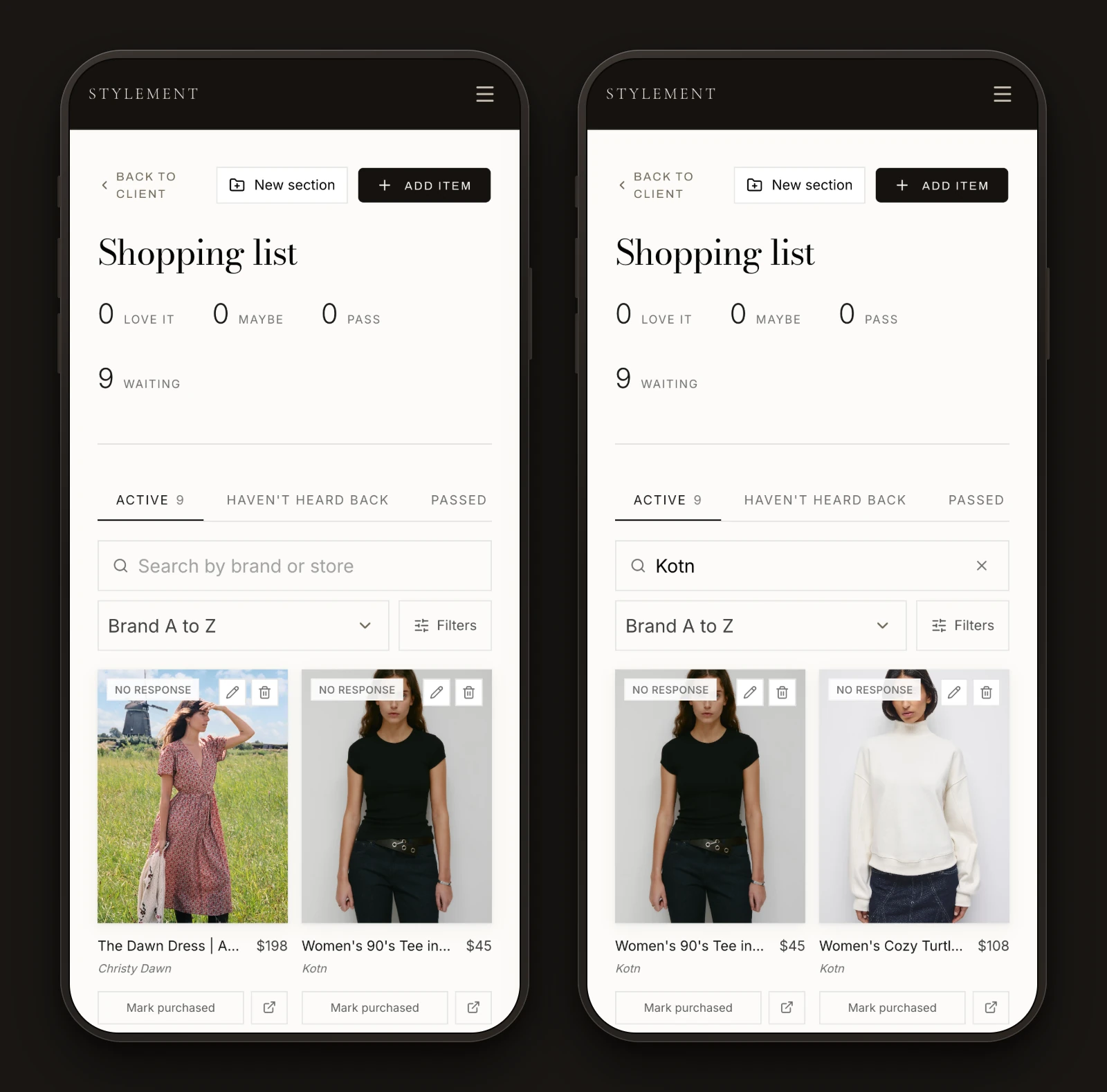
- The shopping list, with what’s been bought and what’s still open.
- Every session, with the date and what you decided.
- The proposal, the signed contract and every invoice.
- What has been ruled out: colors, brands, silhouettes.
- The next step and a date for it. The guide on getting repeat clients goes into why that one matters.
The four kinds of tools stylists use
A spreadsheet or a free template
ClickUp publishes a free Fashion Stylists CRM template, which is a general project tool set up for styling clients. It costs nothing and you can change it freely. The closet photos, the contract and the invoice still live somewhere else, linked by a client name you type each time.
A general small-business CRM
Handles contacts, reminders and a pipeline well. It doesn’t know what a closet or a lookbook is, so those go in a second tool and the client record in the first one points at them.
A wardrobe tool with a client dashboard
GetWardrobe’s Stylist Mode and GoodPix both center on the client’s closet, with a dashboard across clients, according to their own pages. GetWardrobe’s help pages describe general CRM and shopping platforms as focused on new purchases and not on the wardrobe a client already has. Check what each one includes for contracts, invoices and payments, since the closet is the strong part of both.
An all-in-one stylist platform
One record carries the closet, the booking, the proposal, the contract and the invoice. You give up some depth in each piece in exchange for typing a client in once. The all-in-one guide covers that trade in full.
Choosing in ten minutes
- Open a real client from your own roster and try to enter that client. If it takes more than one tool, count how many.
- Ask where the closet lives.
- Ask where the invoice lives, and whether the client can pay it from the same place.
- Ask what you can export if you leave.
- Check what the price becomes when your roster doubles, or when a teammate joins.
Where Stylement fits
Stylement keeps the closet, lookbooks, proposals, e-signed contracts and Stripe invoices in one client record under your brand, with a client passport that logs real styling milestones across the relationship. When the practice outgrows one person, a studio team model lets teammates share clients with their own roles, billed per seat. Starter is $49 a month.
It fits less well if you want a lightweight contact list and nothing else, or if you already run a general CRM your team likes and only need a closet tool beside it. The software comparison shows where each of the others is the better choice.