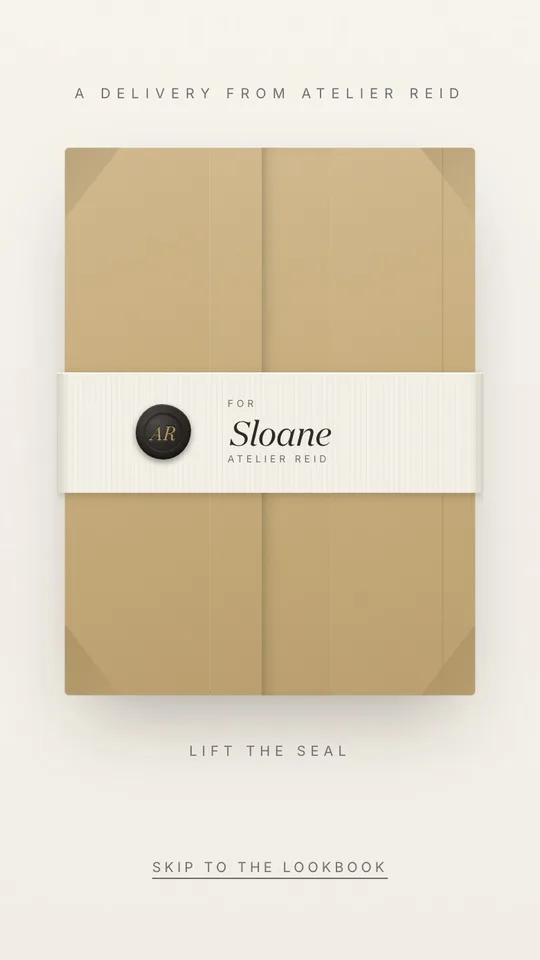
Contracts and invoices, built for styling
Stop bending a generic small-business tool to fit a styling practice. Stylement handles contracts, e-signing, invoices, retainers, and deposits in the same place as your closets, lookbooks, and calendar.
Terms, signature, deposit, balance
The terms
Written once. The contract and the invoice read from the same numbers, so a change in scope updates one document instead of three.
The signature
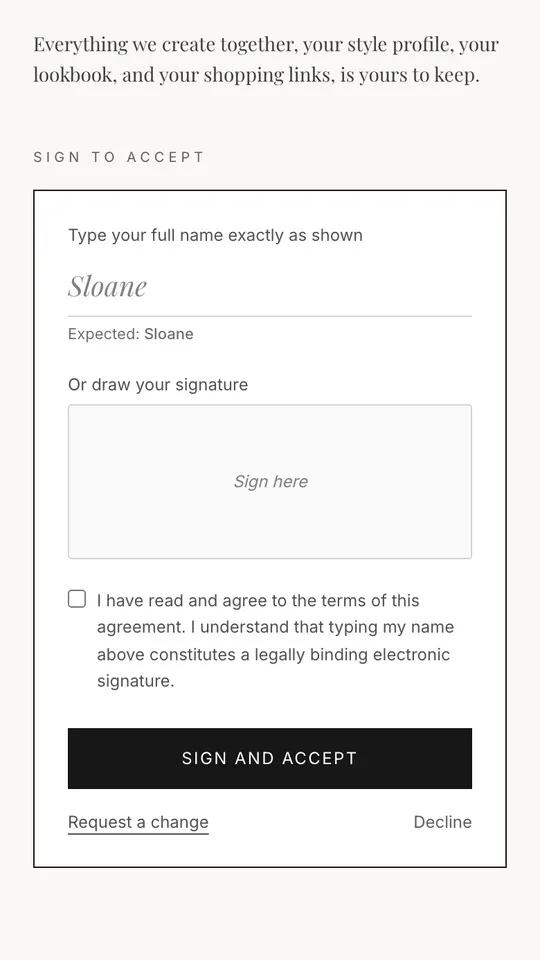
Your client reviews and signs from wherever the link opens. Nothing to print, nothing to scan, and no account to create first.
The deposit
The agreement and the money land together, so the session is held the moment your client commits rather than a week of reminders later.
The balance
The deposit is part of the total rather than a separate payment, so you are never reconciling two documents to work out what is owed.
What stylists cobble together
HoneyBook, Dubsado, and a PDF
Generic business tools that do not know what a styling session, a closet, or a lookbook is. You bend the tool to fit, then keep a spreadsheet on the side for the rest.
One studio, styling-native
Contracts, invoices, retainers, and deposits that sit beside the closet, the lookbooks, and the booking calendar, all under your name.
What this costs on the usual stack
- A contract template edited by hand for every client, and edited again whenever the scope moves.
- An e-signature tool that starts charging per document the moment you outgrow its free tier.
- An invoice raised somewhere else, which has no idea a deposit was already paid.
- A payment link pasted into a message thread, and a spreadsheet to remember who has settled.
- A cancellation policy that lives in the document and in nothing that would enforce it.
- An evening at the end of the month working out which of the three tools is right.
Get paid without the patchwork
- Branded contracts your client reads and e-signs in a browser.
- Invoices and recurring retainers, paid by card through Stripe.
- Per-booking deposits and a cancellation policy that protect your time.
- Every contract and payment tied to the client record, so the money and the styling live together.
Contracts and invoicing, in brief
Does Stylement handle contracts and e-signing?+
Yes. You send a branded contract or proposal and your client reads and signs it in a browser, with no printing and no separate e-sign tool.
Can I collect a deposit when a client signs?+
Yes. A deposit can be collected on signature, and you can set a cancellation policy so your time is protected.
Does it do recurring retainer billing?+
Yes. Retainers and recurring invoices are built in and paid by card through Stripe.
How do payments actually move?+
Payments run through Stripe to your account. Stylement is the studio your client pays through, branded to you.
What happens if a client cancels?+
Your cancellation window, and what it costs, are written into the agreement your client signed. The terms are already agreed rather than negotiated afterwards.
Does the invoice know a deposit was paid?+
Yes. The deposit is part of the total, so the balance is simply what is left after it, and you are not subtracting by hand.
Do payments come to me or to Stylement?+
To you. You connect your own Stripe account, so client money lands in your bank rather than being held and passed on.
Client proposals
Branded proposals your clients sign and pay on one page.
Client book (CRM)
Every client in one record: intake forms, sizes, colors, sessions, closet, and lookbooks.
Client closets
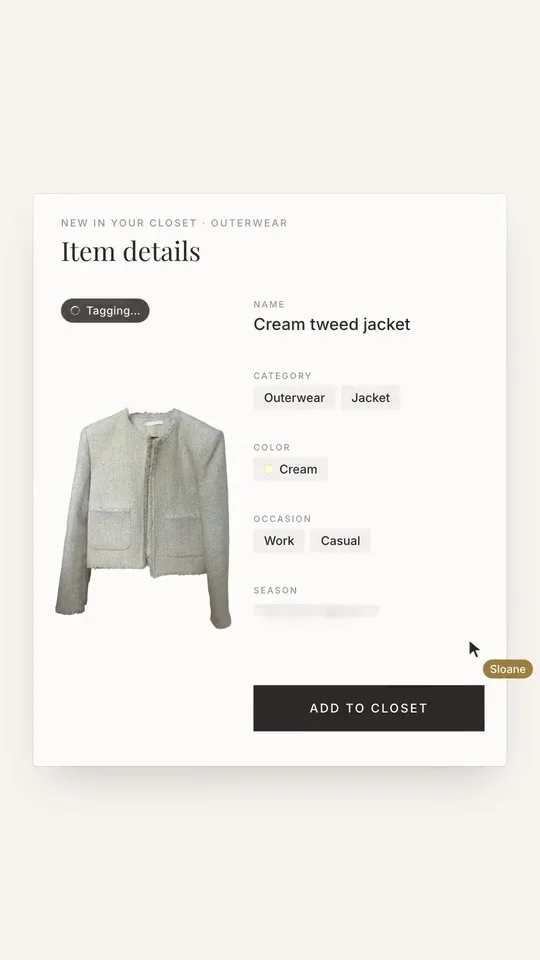
Every client wardrobe cataloged on that client’s record, searchable and filterable by season.
Booking and scheduling
Self-serve booking with deposits, reminders, and a cancellation policy.
Shoppable lookbooks
Interactive lookbooks built from your client’s closet, opened in a browser under your brand.